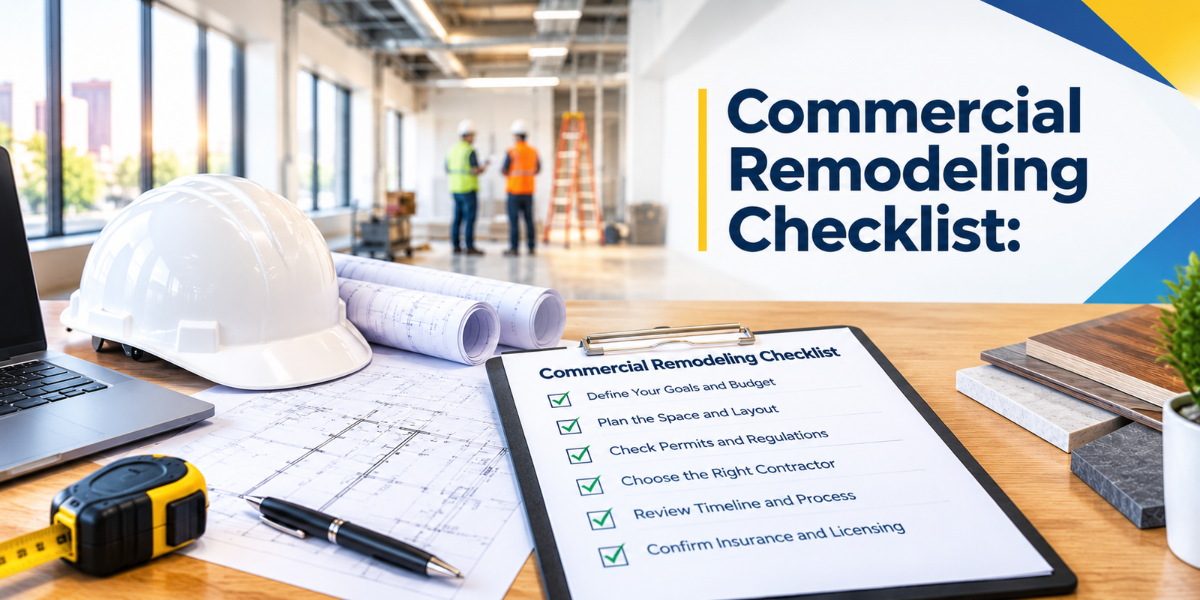
Commercial remodeling can turn an outdated workspace into a modern, functional and welcoming environment. Planning is important when renovating any commercial space, whether it’s an office, retail store, restaurant or any other commercial space, to ensure that costs are managed, disruption is minimized, and your business objectives are met.
But commercial remodeling is more than just a matter of replacing the flooring, fixtures and the interior layout. Permits, building codes, project timelines, contractor qualifications and employee or customer safety are all important factors to consider.
When hiring a general contractor, use this commercial remodeling checklist to prepare your project, assess possible contractors, and make informed decisions.
Define Your Commercial Remodeling Goals
First, you need to determine the reason for the remodeling of your commercial Property. Clear goals assist you in prioritizing enhancements and let your contractor know your expectations.
Think about the following questions:
- Looking for a more efficient workspace?
- Do old interiors impact your brand image?
- Need extra rooms, storage or meeting space?
- Do the fixtures and finishes need repair or replacement?
- Do you need to expand your business on your Property?
For instance, an office remodeling project could emphasize shared work areas, and a retail remodel could emphasize customer flow and product displays.
After you have set your objectives, make a list of necessary improvements and optional improvements. This separation will assist you in making practical decisions when considering your budget and project needs.

Set a realistic remodeling budget
One of the most crucial tasks of any commercial renovation is budget planning. If you don’t have a financial plan, the unexpected costs can cause delays, or you may have to cut back on the improvements that you need to make.
Add these costs to your budget:
- Contractor labor and project management.
- Materials and finishes used in construction.
- Electrical, plumbing and HVAC changes.
- Architectural drawings and design services.
- Issuing permits, inspections and relevant fees.
- Cost of temporary workspace or business relocation.
- Waste collection and end cleaning.
Also, keep a reserve of funds to cover any unforeseen repairs or changes in material costs. This will vary depending on the condition of the Property and the complexity of the project.
Get an itemized quote from each contractor. When comparing detailed proposals, you can see what each one contains and minimize the chances of misunderstandings later.
Inspect the Property Before Starting Work
Prior to remodeling, evaluate the condition of your building. A preliminary inspection can uncover issues that can impact the design, schedule and overall cost.
Check these important areas:
- Structural elements, walls and ceilings.
- Existing electrical systems and lighting.
- Pipes and water supply lines.
- Heating, ventilation and air conditioning systems.
- Floors, roofs, windows and doors.
- Accessibility features and emergency exits.
Hazardous materials can also be present in older buildings and need to be evaluated and removed. So, plan for suitable inspections before disturbing potentially hazardous materials. Early detection of problems allows your general contractor to create a more precise scope of work and prevent construction delays.
Validate Permits, Codes and Accessibility
Remodeling for a business needs to follow the building codes. Requirements are different depending on location, type of Property, type of building, and the nature of the proposed changes.
Before construction, verify:
- If a building or renovation permit is needed.
- If electrical and plumbing permits are required.
- Whether or not engineering approval is required for structural modifications.
- Whether fire safety systems need to be updated.
- If accessibility standards apply to entrances, restrooms and circulation areas.
- Whether inspections should be conducted prior to completion of the project.
Your general contractor can assist in coordinating these needs and determining what approvals are needed. However, before signing an agreement, make sure to explain who will be getting the permits and arranging for inspections. Do not presume that cosmetic changes are automatically exempt from local requirements.

Choose the Right General Contractor
Your choice of contractor can make a huge difference in the quality, price and efficiency of your remodeling project. Seek out someone who has experience in commercial properties that are comparable to yours.
Use this checklist to assess potential contractors:
- Check for relevant licenses and insurance.
- Review previous commercial remodeling projects.
- Ask for customer references.
- Compare estimates and project schedules.
- Verify permits and inspections.
- Discuss communication methods and progress updates.
- Ask about subcontractor selection and supervision.
Also, see if the contractor is familiar with your business and scheduling needs. Careful planning by a contractor around customer access or employee activity can help to minimize unnecessary disruption.
Don’t choose a company because they quote you the lowest price. Experience, reliability, artistry, and clear communication are also very important.
Develop a Detailed Project Schedule
Businesses may have to deal with disruption when renovating their commercial Property. A realistic schedule enables you to educate employees, customers, suppliers and management about temporary changes.
Talk to your contractor about these scheduling issues:
- Expected start and completion dates.
- Orders and delivery times for materials.
- Major construction milestones.
- Inspection dates and approval dates.
- Weather and supply issues that may cause delays.
- Temporary closures or limited work areas.
Try to arrange disruptive work for the evenings, weekends or quieter business times if possible. But check if these arrangements have an impact on labor costs or contractor availability.
Set up regularly scheduled progress meetings to review work completed, discuss issues, and approve any required changes in a timely fashion.
Create a Detailed Project Timeline
Choosing materials and finishes early on in the process can help avoid delays and can assist with making consistent design choices. Your choices should depend on your business requirements, branding, maintenance goals, and budget.
Prioritize these considerations:
- High-traffic durable flooring.
- Utilization of energy-efficient lighting and equipment.
- Useful furniture and storage.
- Easy-to-maintain wall finishes and surfaces.
- Appropriate sound control for offices and meeting rooms.
- Comfortable indoor temperatures and ventilation.
- Coordinated colors and finishes that complement your brand.
Request your contractor to detail the benefits, upkeep and lifespan of the materials they suggest. Important decisions made prior to construction also minimize substitutions.
Before signing a Contract, Review the Contract
With a written agreement, both parties are safeguarded as it outlines what each is responsible for, how they will be paid, and what the project will entail.
Be sure to include the following in the contract:
- The complete scope of work.
- Materials, finishes and standards of installation.
- Schedule and milestones for the project.
- The payment terms and approved payment stages.
- Procedures for change orders.
- Responsibility for permits and inspections.
- Cleanup, warranties and final handover requirements.
Carefully read each section before signing. Changes in the scope of work should be recorded and agreed to in writing to avoid disagreement regarding extra costs or delays.
Successful commercial remodeling starts with a clear plan, a realistic budget, and the right construction professional. By inspecting your property, confirming regulatory requirements, selecting suitable materials, and reviewing your contract, you can approach your renovation with greater confidence.
A qualified general contractor can help coordinate the different stages of construction while keeping your business objectives in focus. For professional commercial remodeling assistance, contact California Dreamin Builders to discuss your project requirements and explore solutions tailored to your commercial space.
Frequently Asked Questions
How do I choose a commercial remodeling contractor?
Review licensing, insurance, commercial project experience, client references, written estimates, communication practices, and proposed construction timelines before making your decision.
Do commercial remodeling projects require permits?
Many commercial renovations require permits, depending on the work involved, local building regulations, structural changes, and applicable safety requirements
How can I reduce business disruptions during remodeling?
Coordinate construction schedules carefully, establish temporary work areas, communicate changes early, and consider completing disruptive activities outside regular business hours.
Why is a written remodeling contract important?
A written contract establishes project responsibilities, costs, deadlines, payment terms, approved changes, and warranty conditions, helping prevent misunderstandings and disputes.